
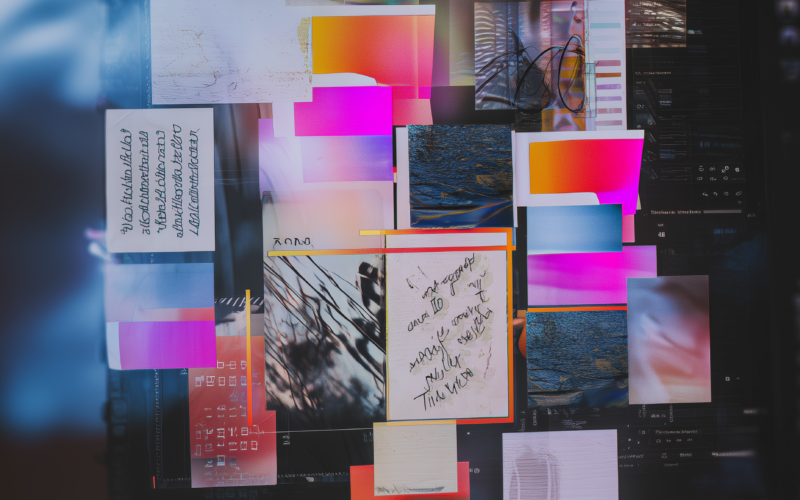
For a long time, the sketchbook was one of the most private tools in an artist’s process. It was not meant to impress anyone. It was a place for unfinished lines, weak ideas, sudden experiments, rejected compositions and visual questions that had no clear answer yet. A sketchbook helped the artist think before making a finished work. Today, artificial intelligence is beginning to play a similar role for many digital artists. Not as a replacement for skill, taste or authorship, but as a fast visual laboratory where ideas can be tested before they become final images.
This is one of the most interesting shifts in creative technology. AI art is often discussed as if the main question is whether a generated image can be considered finished art. But for many artists, the more useful role of AI is not final production. It is early exploration. It helps them ask: What if the figure were smaller? What if the light came from behind? What if the scene felt colder, softer, more theatrical or more surreal? Instead of spending hours creating each version manually, an artist can now generate visual directions in minutes.
From Final Image to Visual Thinking
The most productive use of AI often begins before the final artwork exists. At this stage, the artist is not trying to create a perfect image. They are trying to understand what kind of image they want to make. This difference matters.
Traditional sketching is already a form of thinking. A quick drawing can reveal whether a composition is balanced, whether the main object has enough weight, or whether the emotional tone is clear. AI extends this process by producing many rough possibilities very quickly. It can show variations of framing, atmosphere, lighting, texture and color palette before the artist commits to one direction.
For example, a concept artist working on a fantasy city might not ask AI for a polished final illustration. Instead, they may test several visual approaches: a city built vertically into cliffs, a city covered in mist, a city lit by warm market lamps, or a city seen from a distant aerial view. Each version becomes a visual note. The artist studies the results, keeps useful fragments, rejects the rest and gradually defines the direction of the project.
Composition in Minutes
Composition is one of the areas where AI can be especially helpful as a sketchbook. A strong composition controls how the viewer’s eye moves through the image. It defines hierarchy, rhythm, tension and focus. But testing composition manually can be slow, especially when an idea involves complex scenes, multiple figures or detailed environments.
AI allows artists to test broad structural choices quickly. Should the subject be centered or placed at the edge? Should the scene feel crowded or empty? Should the camera angle be low, intimate, distant or cinematic? These are not small details. They change the emotional meaning of the work.
An artist may generate several rough layouts and immediately see which one carries the strongest visual energy. One composition may feel too decorative. Another may create better tension. A third may accidentally reveal a more interesting relationship between foreground and background. In this sense, AI does not make the decision for the artist. It gives the artist more material to judge.
The human eye remains essential. AI can produce options, but it cannot always understand intention. It may create an attractive image that distracts from the real concept. The artist still has to ask: Does this composition serve the idea, or is it only visually impressive?
Testing Color Before Commitment
Color is another area where AI works well as a fast testing tool. A color palette can completely change the emotional reading of an image. The same portrait can feel nostalgic, cold, dangerous, romantic or artificial depending on the balance of tones. Before AI tools became common, artists often created mood boards, color thumbnails or reference collections to explore these options.
AI can speed up this stage. An artist can test warm sunset tones, muted winter blues, acidic cyberpunk lighting or soft pastel atmospheres within minutes. The point is not to accept the first generated palette. The point is to compare emotional possibilities.
This is especially useful when the artist is unsure about the mood of a project. A poster, game environment, album cover or editorial illustration may need a very specific emotional temperature. Too much contrast can make it aggressive. Too little contrast can make it flat. A bright palette may attract attention but weaken the story. A darker palette may look elegant but reduce clarity.
By using AI as a sketchbook, artists can see these tensions earlier. They can test color not as decoration, but as a narrative decision.
Mood as a Creative Variable
Mood is harder to define than composition or color, but it is often what makes an image memorable. Mood is the emotional weather of a visual work. It comes from light, space, texture, facial expression, atmosphere, rhythm and even implied silence.
AI tools are useful because they allow artists to test mood through language. A prompt can describe not only objects, but also feelings: lonely, ceremonial, anxious, playful, dreamlike, exhausted, sacred, artificial, intimate. The generated results may not be perfect, but they can help the artist discover which emotional direction feels alive.
This is where prompt writing becomes a new form of visual thinking. The artist is not simply giving commands. They are translating intuition into language and then reading the visual response. Sometimes the result is wrong in a productive way. It may misunderstand the prompt but suggest an unexpected atmosphere. That accident can become part of the creative process.
The Risk of Looking Finished Too Soon
The biggest danger of AI as a sketchbook is that rough ideas may look too polished too early. A traditional sketch usually signals its own incompleteness. It is clearly provisional. AI images, however, often arrive with dramatic lighting, detailed textures and a finished surface. This can trick artists into accepting a weak idea because it looks impressive.
That is why discipline is important. Artists need to treat AI outputs as studies, not conclusions. A beautiful generated image can still have poor structure, unclear storytelling or generic style. The sketchbook value of AI appears only when the artist remains critical.
The best workflow is selective. Generate, compare, extract, redraw, combine, simplify, correct and reinterpret. The final artwork should carry the artist’s decisions, not just the machine’s surface effects.
A New Kind of Creative Speed
AI changes the speed of early visual exploration. It does not remove the need for drawing, design knowledge, art history, personal taste or technical control. Instead, it compresses the time between question and visual response. Artists can test more ideas before choosing one. They can fail faster, compare faster and sometimes discover directions they would not have reached through routine habits.
This is why AI may be most valuable not as an automatic artist, but as a visual sketchbook. It gives creators a place to think with images at high speed. It helps them test composition, color and mood before the real work begins.
The future of digital art will not belong only to those who generate the most images. It will belong to artists who know how to ask better visual questions, recognize stronger answers and turn fast experiments into intentional work.