
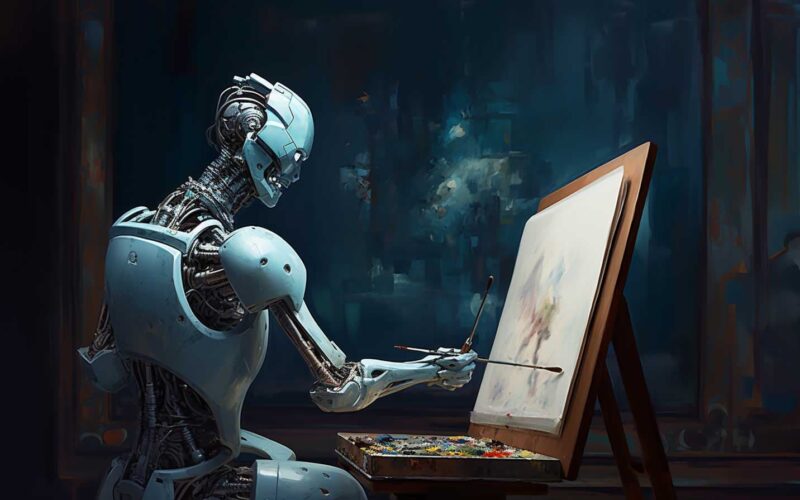
The modern world is rapidly changing under the influence of new technologies that penetrate all spheres of life, including art. Artificial intelligence (AI) is already capable of creating impressive works comparable to those made by humans and even going beyond traditional artistic forms. In this context, the question arises: who really creates the art of the future — the artist with their creative intuition or machines based on algorithms and big data?
AI changes not only the production of art but also ways of entertainment. In the online space, where gaming platforms and gambling such as SK online casino are developing today, artificial intelligence technologies are actively used to create visual effects and unique user experiences, combining creativity and interactivity. This is an example of how the boundaries between technology and creativity are blurring, and art becomes part of the digital environment.
Artificial Intelligence as a New Creator
AI creates art based on analyzing vast amounts of data, studying styles, techniques, and historical trends. Algorithms can generate paintings, music, texts, sometimes surprising with their originality and innovation. Programs like DALL·E or Midjourney already can create detailed images from text descriptions, opening new horizons for visual art.
However, AI creation is not just copying or repetition. Algorithms are trained on thousands of examples, but the way they combine and interpret them can lead to unexpected and unique results. This approach changes the understanding of what it means to be an artist: now the creator is not only a person with a brush but also a programmer who designs algorithms, and even the machine itself.
Among AI’s advantages are the ability to work tirelessly, create many variations, and quickly adapt to new styles. This is especially relevant for the entertainment industry and commercial design, where speed and innovation play a key role. In Slovenia, as in other countries, companies are increasingly applying AI in advertising, media, and even gaming applications, expanding the boundaries of the creative process.
The Role of Humans in Art: Emotions and Meaning
Despite AI’s impressive achievements, the artist’s role remains key. Human creativity is unique in that it reflects personal experience, emotions, and deep layers of meaning. Art is not only image or sound but communication, challenge, and expression of the inner world, which is difficult to algorithmize.
Artists invest their work with cultural contexts, philosophical ideas, social issues, making their works alive and relatable to the viewer. Machines are not yet able to fully understand these aspects and create art with such a level of emotional richness and significance. In Slovenia, a country with a rich cultural tradition, art retains a special role in society, and interest in live creativity remains high.
On the other hand, many modern artists already use AI as a tool to expand their possibilities. This is not competition but symbiosis, allowing the creation of new forms and ideas that go beyond traditional art. Such cooperation contributes to the development and enrichment of the cultural space.
Ethics and Authorship in the Age of Artificial Intelligence
With the emergence of AI in art, important questions about authorship and ethics arise. Who is the true creator of a work — the person who sets the parameters or the algorithm that forms the final product? How to protect the rights to works created this way and how to recognize their cultural value?
Answers to these questions are still forming in both legislation and professional communities. For many artists and art lovers, the human component is important, without which art is perceived as soulless. At the same time, AI art is increasingly presented at exhibitions, sold at auctions, and recognized by experts, indicating its significance and potential.
In Slovenia, these topics are also discussed on a cultural level, including educational institutions and creative circles, where they try to find a balance between new technologies and preserving traditions.
The Future of Art: Harmony Between Humans and Machines
The most likely development scenario is the collaboration between the artist and AI, where technology serves as a tool helping to realize bold ideas. AI can simplify technical tasks, offer unexpected solutions, and provide access to new forms of creativity, while humans retain the role of source of meaning, emotional depth, and cultural context.
In this perspective, the art of the future becomes multidisciplinary and flexible. Modern digital platforms, including virtual and augmented reality, provide new opportunities for interaction between audiences and artworks. In this process, online entertainment such as interactive games and casinos can serve as examples of integrating art and technology, where visual and sound design create a unique atmosphere and captivating experience.
For Slovenia, a country that values both innovation and cultural heritage, this approach presents great potential for developing creative industries and enhancing their competitiveness on the international stage.
Conclusion
The question of who creates the art of the future — AI or the artist — has no straightforward answer. Artificial intelligence becomes a powerful tool expanding creative horizons, but humans retain the unique ability to invest works with emotions, ideas, and meaning. Their interaction opens a new era of art where technology and tradition go hand in hand.
For readers in Slovenia, this process is interesting both culturally and technologically. In the future, art will increasingly integrate with digital entertainment and innovations, opening great opportunities for creators and audiences alike. The present and future of art is a dialogue between humans and machines, in which amazing and unexpected forms of creativity are born.